Lux Measurement
Measure the illuminance reaching the tester so you can make controlled before/after or A/B comparisons.
Measure what your headlights actually deliver. HL200 combines Lux, CCT, separate high / low beam testing, and continuous output-drop monitoring in one practical automotive lighting tester.
For meaningful before/after comparisons, keep test distance, tester position, vehicle position and headlight aiming conditions consistent.
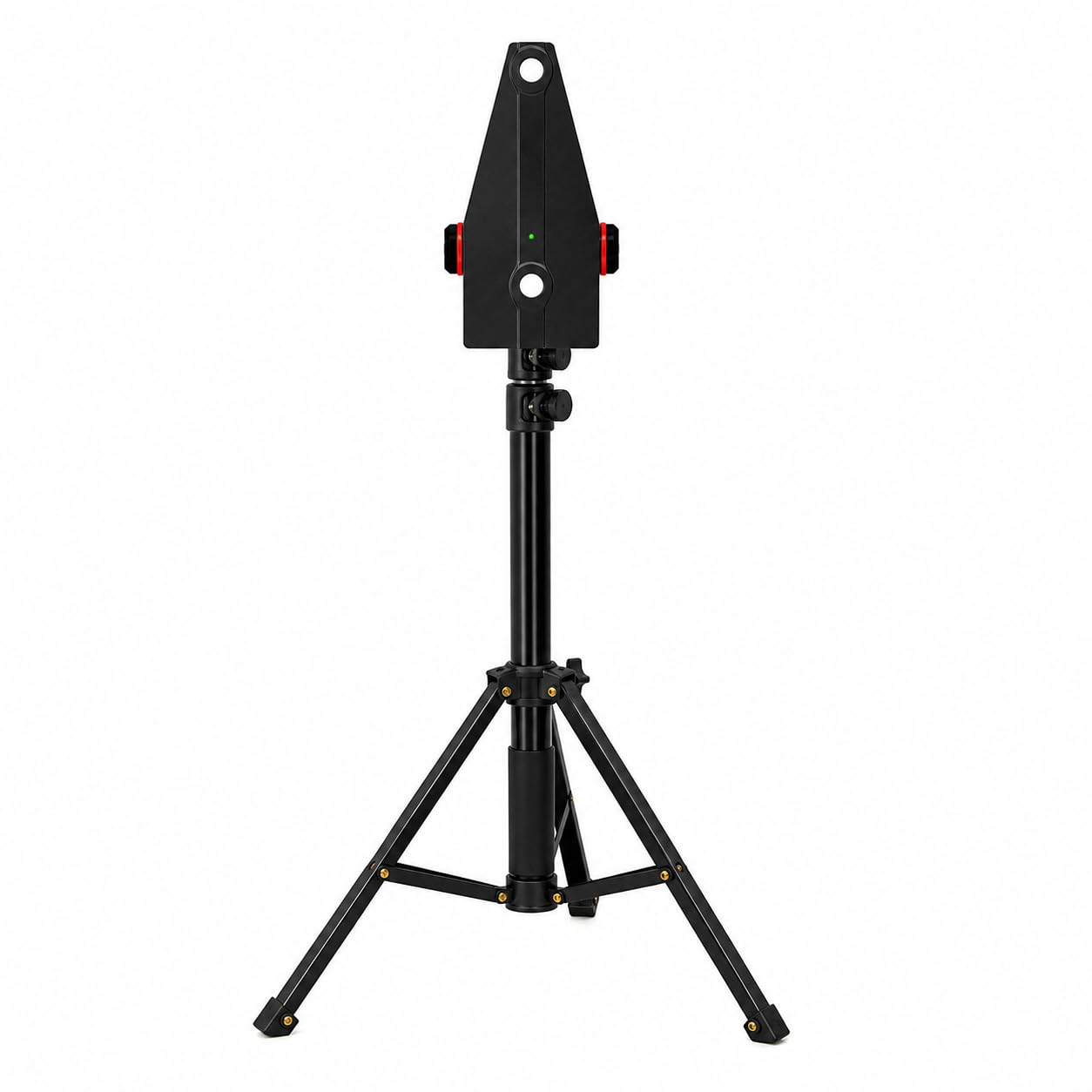
What is the HL200?
Letrava HL200 is an automotive headlight tester designed to measure illuminance in lux and correlated color temperature (CCT). It allows high beams and low beams to be measured separately and can monitor headlight output continuously to reveal changes after warm-up.
In practical terms: HL200 helps you compare a stock bulb with an upgrade, compare two lighting options, check left/right consistency, or determine whether light output fades as an LED headlight heats up.
Core Functions
HL200 is designed for repeatable automotive headlight testing where brightness, color temperature and output stability all matter.
Measure the illuminance reaching the tester so you can make controlled before/after or A/B comparisons.
Compare correlated color temperature to see the measured color difference between headlight setups.
Evaluate high-beam and low-beam performance independently instead of combining both into one result.
Quantify how much measured illuminance changes from the beginning of a continuous test to the current reading.
Follow output over time instead of judging a headlight from a single reading immediately after switch-on.
Continuous Test summarizes the measurement history so output stability is easier to understand.
Separate Measurement
High beam and low beam serve different driving functions. HL200 keeps the two measurements separate, helping you evaluate each beam mode on its own rather than relying on one combined number.

Continuous Test
LED headlight output can change as the system warms up. A single reading at switch-on can miss that behavior. HL200 Continuous Test tracks measured output over time and shows how performance changes.
Warm-Up Fade
Use the trend curve and output-drop percentage to compare a headlight at the beginning of a test with its later performance. This is useful when evaluating thermal fade, driver behavior and real operating stability.

Applications
Keep the measurement conditions consistent and use HL200 to turn headlight changes into data that can be compared and documented.


Recommended Test Method
Lux depends on geometry. For useful comparisons, repeat the same setup instead of changing the distance or aiming between measurements.
Park on the same level surface and keep the vehicle location unchanged between comparison tests.
Place the HL200 at the same distance, height and orientation for every test.
Measure high beam and low beam separately so results are not mixed.
Use the same setup for stock vs. upgrade, A/B bulbs or warm-up testing.
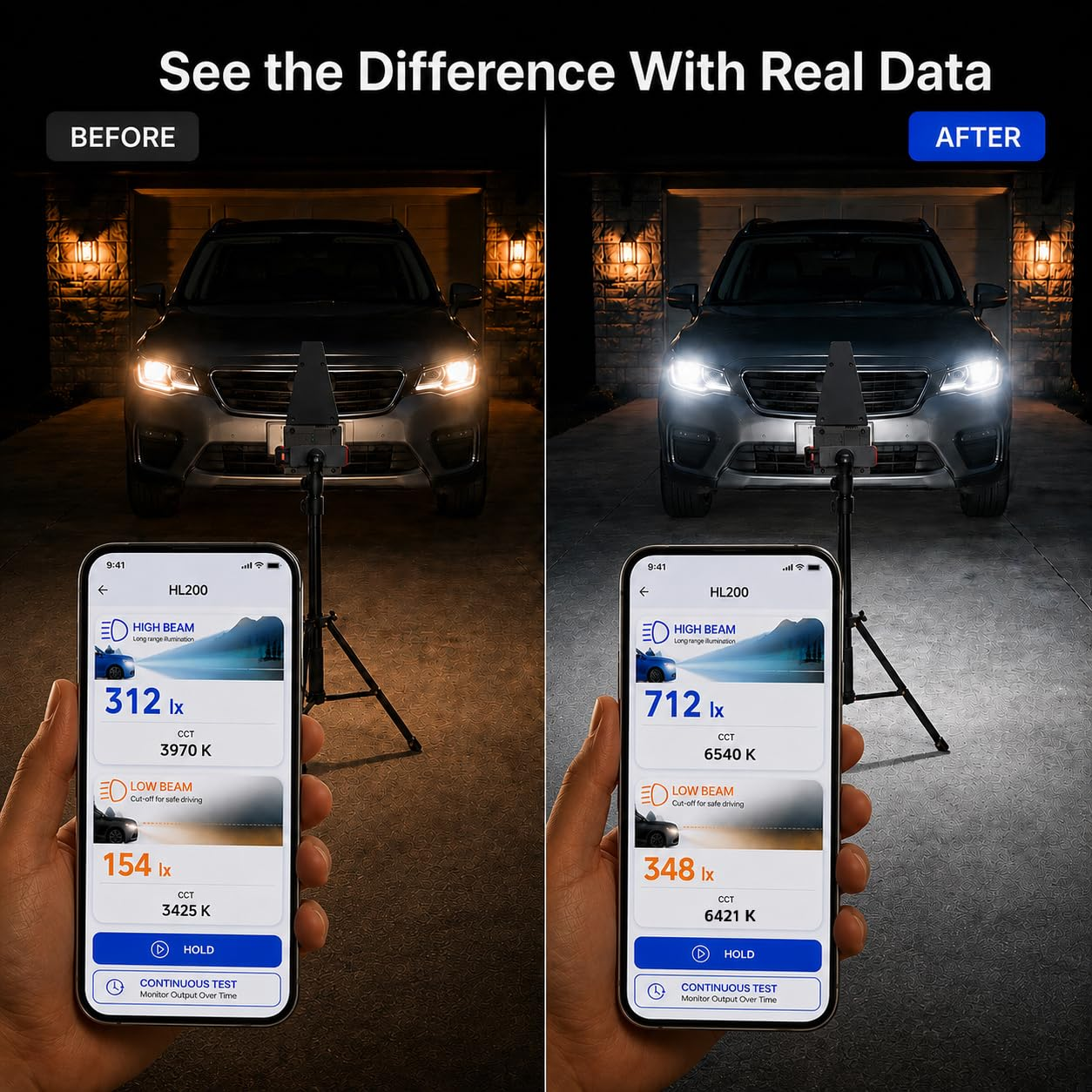
Before / After
Visual brightness can be misleading. A controlled before/after test helps document the measured change in illuminance and color temperature.
Lux vs. Lumens
Lumens describe total light emitted by a source. Lux describes illuminance reaching a surface or sensor. The HL200 measures lux at the tester position.
That means a lux comparison is most useful when the distance, height, aiming, vehicle position and tester position stay the same. Use controlled conditions to compare one setup with another.
Product Video
Watch how HL200 is used for automotive headlight measurement and continuous output testing.
FAQ
Short answers to the questions most relevant to automotive headlight testing.
HL200 measures automotive headlight illuminance in lux and correlated color temperature (CCT). It also supports continuous testing so you can see output changes over time.
Yes. High-beam and low-beam measurements are kept separate, which makes it easier to evaluate each beam mode independently.
Yes. Continuous Test displays a trend over time together with MAX, MIN, AVG, CURRENT and the output-drop percentage from the start of the test to the current reading.
Yes. Keep the vehicle position, tester distance, tester height and aiming conditions consistent, then compare the measured lux and CCT before and after the change.
No. Lumens describe total emitted light, while lux describes illuminance reaching a surface or sensor. HL200 measures lux at the tester position.
It is useful for automotive lighting shops, technicians, LED headlight installers and vehicle owners who want repeatable data for upgrades, A/B comparisons and output-stability tests.
Letrava HL200
Lux. CCT. High / low beam testing. Continuous output tracking. Price: US$99.80.